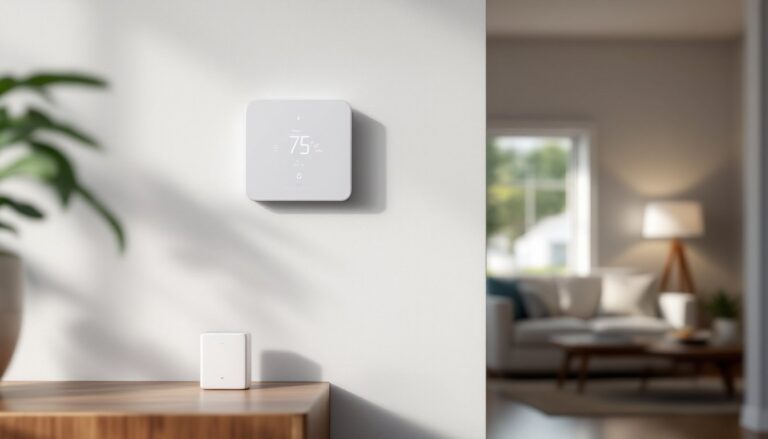
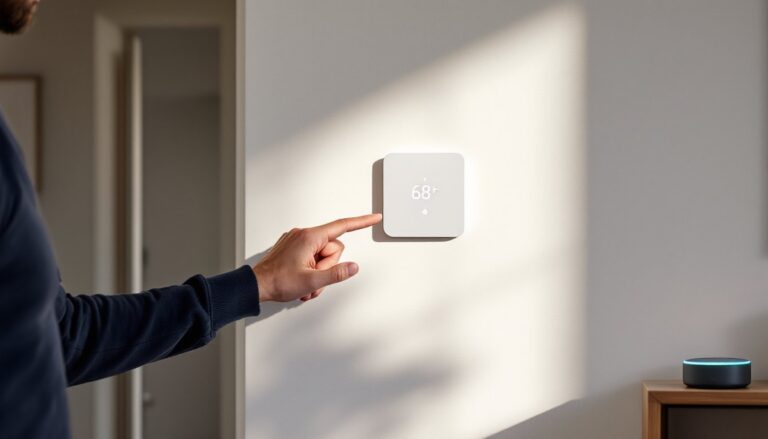
Smart thermostats have shifted from luxury tech to practical home upgrades, and Google Nest remains a frontrunner in 2026. Whether someone’s replacing a decades-old dial thermostat or upgrading from a basic programmable unit, the Nest lineup offers real energy savings, remote control, and learning capabilities that adapt to daily routines. This guide covers everything homeowners need to know: what sets Nest apart from competitors, how to tackle installation without calling an HVAC tech, optimization strategies that actually reduce utility bills, and whether the investment makes sense for their specific home setup. No fluff, just the practical details that matter when choosing and living with a smart thermostat.
Table of Contents
ToggleKey Takeaways
- The Google Nest smart thermostat offers real energy savings of 10-15% on average through learning algorithms, Home/Away Assist, and automated scheduling that adapts to daily routines.
- Most homeowners can complete DIY installation of a Google Nest smart thermostat in 30-60 minutes, but compatibility checking and C-wire considerations are critical before purchasing.
- Enable Home/Away Assist, set manual schedules first, and install additional temperature sensors in problem areas to maximize energy savings and comfort optimization.
- Nest excels for Google ecosystem users with predictable schedules and standard 24V HVAC systems, but isn’t ideal for rentals, proprietary HVAC systems, or high-voltage heating setups.
- The investment pays for itself in 2-4 years through reduced utility bills, with faster payback in extreme climates and slower returns in mild climates with minimal heating/cooling needs.
- Integrate Nest with Google Home routines and Matter-compatible devices for seamless automation, though cloud dependency means remote features require active internet connectivity.
What Makes the Google Nest Smart Thermostat Stand Out?
The Google Nest family includes multiple models in 2026, from the budget-friendly Nest Thermostat to the premium Nest Learning Thermostat (4th generation). All share core capabilities that separate them from basic programmable units: Wi-Fi connectivity, smartphone control via the Google Home app, and Energy Star certification for efficiency tracking.
What distinguishes Nest from the pack is its ecosystem integration and interface polish. The mirrored display on premium models doubles as a room focal point, showing temperature, weather, or time when approached. Motion sensors (Farsight technology) detect movement up to 20 feet away, activating the display automatically, useful when walking past with an armload of groceries.
Nest’s compatibility spans most 24V HVAC systems, including forced air, heat pump, radiant, and dual-fuel setups. It works with gas, electric, oil, and even some hydronic systems. The built-in compatibility checker on Google’s site requires inputting existing wire labels (R, W, Y, G, C, etc.) to confirm fitment before purchase. Homeowners with high-voltage systems (110V/240V baseboard heaters, for example) need a relay or step-down transformer, Nest won’t wire directly to line voltage.
Key Features and Smart Technology
The learning algorithm is Nest’s signature feature. Over the first week or two, the thermostat observes manual adjustments, when someone turns heat up in the morning, lowers it at bedtime, or cranks AC after work. It builds a schedule automatically, eliminating the tedious programming most people skip on traditional thermostats. Users can override or edit the learned schedule anytime through the app.
Home/Away Assist uses phone location and built-in sensors to detect when the house is empty, then switches to an Eco Temperature range (typically 40–70°F for heating, 76–90°F for cooling). This prevents heating or cooling an empty home without requiring manual mode changes. It’s smarter than basic geofencing because it cross-references multiple factors: motion sensors, phone GPS, and connected Nest devices like cameras or door locks.
Energy History provides daily and monthly reports showing runtime, temperature swings, and comparisons to similar homes in the area. The Nest Leaf icon appears when selecting an energy-efficient temperature, offering a small psychological nudge toward conservation. Independent testing suggests Nest users save 10–15% on heating and cooling costs on average, though results vary widely based on prior thermostat habits and home insulation quality.
The 4th-gen Learning Thermostat added a borderless display, improved sensors, and Matter support for better cross-platform smart home compatibility. Homeowners considering competitive models should note that top smart thermostats in 2026 include Ecobee and Honeywell options with room sensors and different feature priorities.
Installation Guide: DIY Setup Made Simple
Most homeowners can install a Nest thermostat in 30–60 minutes with basic tools. The process is straightforward, but a few considerations determine whether it’s a DIY job or time to call an HVAC tech.
Before starting:
- Check compatibility using the online tool or examining existing wiring. If there’s no C-wire (common wire), Nest includes a trim kit and can often pull enough power from other wires. Systems without a C-wire and low power availability may need a C-wire adapter (around $20–40) or professional installation to add one.
- Turn off power at the breaker panel controlling the HVAC system. Don’t rely on the thermostat switch alone. Verify power is off with a non-contact voltage tester, cheap ($10–15) and essential for electrical safety.
- Note existing wiring with a phone photo before disconnecting anything. Label each wire if the old thermostat didn’t already have letter markers.
Tools needed:
- Phillips and flathead screwdrivers
- Drill with 3/16″ bit (for drywall anchors if mounting to drywall alone)
- Level (the bubble type or a smartphone app works)
- Wire strippers if extending or repairing wires
Step-by-step installation:
-
Remove the old thermostat. Pull off the faceplate, unscrew the base from the wall, and carefully disconnect wires. Most snap into terminal blocks: others use small screws. If wires retract into the wall, tape them to the wall surface temporarily or use a pencil pushed through the loops.
-
Install the Nest base. The Nest Thermostat uses a simple mounting plate: the Learning Thermostat has a more refined trim kit. Level the base before marking screw holes. If mounting over an existing rectangular thermostat footprint, the trim plate usually covers old paint lines. For drywall-only mounting (no stud behind), use the included anchors. Tighten screws snug but not over-torqued, the plastic base can crack.
-
Connect wires to labeled terminals. Match each wire’s letter to the Nest terminal: R (power), W (heat), Y (cooling), G (fan), C (common), and others as applicable. Strip about 3/8″ of insulation if needed. Push wires firmly into connectors until they click, a gentle tug should not pull them free. Tuck excess wire into the wall opening.
-
Attach the Nest display. Align the display with the base and press gently until it clicks. The screen should power on immediately (or after a few seconds if charging from low battery).
-
Restore power at the breaker. The Nest will walk through setup: language, Wi-Fi connection, system type confirmation. It may run a test cycle, briefly firing the furnace and AC to verify wiring.
Common installation hiccups:
- No C-wire: Nest often works without one using “phantom power,” but some systems (especially older gas furnaces or short-cycling heat pumps) may cause the Nest to lose power intermittently. Solutions include installing a C-wire adapter at the furnace control board or running a new 18/8 thermostat cable.
- Incompatible systems: Proprietary systems (some Carrier, Trane, or Lennox setups) use communication protocols Nest doesn’t support. Check compatibility before buying.
- Tripped equipment protection: If the furnace or AC won’t respond, check for tripped breakers, blown fuses at the air handler, or safety switches (condensate float switches are common culprits).
When to call a pro: If the home has a multi-stage heat pump, a boiler with zone valves, or high-voltage heating, an HVAC tech can ensure correct wiring and system configuration. Permits aren’t typically required for thermostat replacement (it’s low-voltage control wiring, not building electrical), but local codes vary.
Optimizing Energy Savings and Performance
Installing the Nest is the easy part. Real savings come from tuning settings and understanding how the system interacts with home construction and habits.
Dial in the schedule manually first. While Auto-Schedule learns over time, many users find it helpful to set an initial weekly schedule matching their routine: wake time, leave time, return time, sleep time. The Nest adjusts from this baseline more efficiently than starting from scratch. A common energy-saving schedule keeps temps 7–10°F lower (or higher for AC) during sleep and away periods. Every degree of setback saves roughly 1% on heating/cooling costs.
Enable Home/Away Assist, but verify geofencing settings. If multiple household members have the app, adjust the settings so Eco mode only kicks in when all phones leave the geo-radius (typically a 3-mile radius). Otherwise, the first person leaving might trigger Eco while others are still home.
Use Eco Temperatures strategically. Nest defaults Eco mode to 40°F heating / 76°F cooling. Adjust these ranges based on climate and home insulation. In well-insulated homes, setting Eco heat to 55°F prevents frozen pipes without wasting energy. Poorly insulated homes may need 60°F to avoid condensation issues.
Install Nest Temperature Sensors (sold separately, around $40 each) in frequently used rooms or problem areas, bedrooms that run hot, basement offices that stay cold. The Nest prioritizes comfort in the room with the active sensor during scheduled time blocks. For example, prioritize the bedroom sensor from 10 PM to 6 AM for better sleep comfort.
Check system maintenance through Energy History. Unusual runtime spikes often signal dirty air filters, refrigerant leaks, or failing equipment. The Nest displays system runtime data that can help diagnose issues early. A sudden 50% increase in runtime with no weather change suggests a problem worth investigating.
Integrate with HVAC preventive maintenance. Smart data doesn’t replace physical upkeep. Change filters every 1–3 months (check monthly if using cheap fiberglass filters, less often for pleated media filters). Clean outdoor condenser coils annually. Seal ductwork leaks, homes lose 20–30% of conditioned air through duct leaks on average, and no smart thermostat can compensate for that waste.
Understand Nest’s limitations in extreme climates. In regions with harsh winters or brutal summers, homeowners report that the 4th-generation Nest Learning Thermostat performs better with updated sensors that reduce temperature overshoot. Older models sometimes overshoot target temps by 2–3 degrees, especially with forced-air systems that have high airflow.
Integration with Your Smart Home Ecosystem
Nest’s biggest advantage for existing Google users is seamless ecosystem integration. The thermostat appears in the Google Home app alongside lights, locks, cameras, and speakers. Voice control through Google Assistant allows natural commands: “Hey Google, set the thermostat to 68” or “turn on Eco mode.”
Routines and automation unlock real convenience. Create a “Good Night” routine that locks doors, turns off lights, arms the security system, and sets the Nest to 66°F, all with one voice command or scheduled trigger. A “Leaving Home” routine can switch to Eco mode, turn off unnecessary devices, and send a notification when complete.
Matter support (on newer models) means Nest can interact with smart home devices from other ecosystems, Apple HomeKit, Amazon Alexa, Samsung SmartThings, without requiring separate bridges or workarounds. As of 2026, Matter adoption has matured enough that cross-platform routines (like Alexa triggering Nest adjustments) work reliably for basic functions.
Energy partnerships in some regions allow utilities to participate in demand-response programs through Nest. During peak demand periods (hot summer afternoons), the utility can nudge the thermostat up 1–2 degrees with user permission in exchange for bill credits or rebates. Participation is opt-in and can be overridden anytime.
Third-party integrations extend functionality. IFTTT (If This Then That) applets can trigger Nest changes based on weather forecasts, stock price changes, or any other obscure condition imaginable, though most practical uses revolve around presence detection and weather responsiveness. Home Assistant and Hubitat users can pull Nest into more complex local automation systems, though cloud dependency remains a limitation.
Voice assistant alternatives: Nest works with Amazon Alexa for voice control, but with fewer features than Google Assistant integration. Apple HomeKit support was dropped from newer Nest models, pushing Siri users toward Ecobee or Honeywell if HomeKit compatibility matters. When comparing features across platforms, leading smart thermostat roundups note that ecosystem loyalty often drives purchasing decisions as much as thermostat specs.
Is the Google Nest Smart Thermostat Right for Your Home?
Nest makes sense for many homes, but it’s not universal. Consider these factors before buying.
Best fit:
- Homeowners with predictable schedules who’ll benefit from automation
- Existing Google smart home users wanting ecosystem cohesion
- Tech-comfortable DIYers willing to troubleshoot Wi-Fi or app issues
- Homes with standard 24V HVAC systems (forced air, heat pump, boiler)
- Those interested in energy monitoring and historical data
Poor fit:
- Rental properties where the tenant can’t modify wiring or doesn’t own the thermostat long-term
- Homes with proprietary HVAC systems (check compatibility first)
- High-voltage baseboard or radiant ceiling heat without existing low-voltage controls
- Users who prefer physical buttons over touch/app controls (Nest relies heavily on the app for advanced settings)
- Households with inconsistent schedules where manual control is simpler
Nest Thermostat vs. Nest Learning Thermostat: The budget Nest Thermostat ($130–150) covers basics, scheduling, remote control, energy tracking, but lacks the learning algorithm, Farsight display, and premium build. The Nest Learning Thermostat ($230–250) adds auto-scheduling, better sensors, and a more refined interface. For most DIYers, the mid-tier model offers the best balance unless they’re committed to letting the device learn habits over manual programming.
Alternatives worth comparing: Ecobee offers room sensors included in the box and better Apple HomeKit integration. Honeywell Home T9 and T10 models provide strong alternatives with physical buttons and excellent contractor support. Amazon Smart Thermostat offers basic features at under $80, ideal for budget-conscious buyers in the Amazon ecosystem.
Payback period: At 10–15% energy savings, a $200 thermostat pays for itself in 2–4 years for most households, depending on regional energy costs and current thermostat efficiency. Homes in extreme climates (heavy heating or cooling loads) see faster payback. Mild climates with low energy usage may take longer to recoup the investment.
Privacy considerations: Nest collects usage data, home/away patterns, and integrates with Google’s ecosystem. Data is encrypted and users control sharing settings, but cloud dependency means service outages (rare but they happen) can temporarily disable remote control. The thermostat continues basic local operation, but scheduling and app features require connectivity.
Conclusion
The Google Nest smart thermostat delivers on its core promise: easier climate control, meaningful energy savings, and smooth integration for Google ecosystem users. Installation is manageable for most DIYers with standard HVAC systems, though compatibility checking and C-wire considerations matter. The real value emerges over months of use as schedules refine, energy data accumulates, and smart home routines automate daily comfort. Homeowners who invest time in optimization, setting schedules, placing sensors, integrating routines, see the best results. For those committed to the Google platform and willing to engage with the technology, Nest remains a solid upgrade in 2026.