When Amazon launched its smart thermostat a few years back, it filled a gap in the market: a no-frills, Alexa-connected device priced under $80. Fast-forward to 2026, and it’s still holding its ground against pricier competitors like Nest and Ecobee. But is cheaper always better? This review digs into real-world performance, installation quirks, and whether this thermostat actually saves energy, or just looks good on paper. If you’re weighing budget versus features, here’s what you need to know before mounting one on your wall.
Table of Contents
ToggleKey Takeaways
- The Amazon smart thermostat offers reliable temperature control with Energy Star certification at an affordable $80 price point, undercut competing models like Nest and Ecobee by $50 to $200.
- Installation is DIY-friendly for most homeowners, taking 30 minutes or less, but requires a C-wire for continuous power—check your existing wiring before purchasing.
- This smart thermostat excels with Alexa voice control and basic scheduling features, but lacks remote sensors, HomeKit support, and advanced energy analytics found in premium alternatives.
- Real-world energy savings average $50 annually when upgrading from non-programmable thermostats, with payback occurring in roughly 1.6 years; utility company rebates can reduce upfront costs to under $50.
- The device is best suited for Alexa-ecosystem users prioritizing affordability and straightforward control, but not ideal for homes needing multi-room temperature monitoring or cross-platform compatibility.
What Makes the Amazon Smart Thermostat Stand Out?
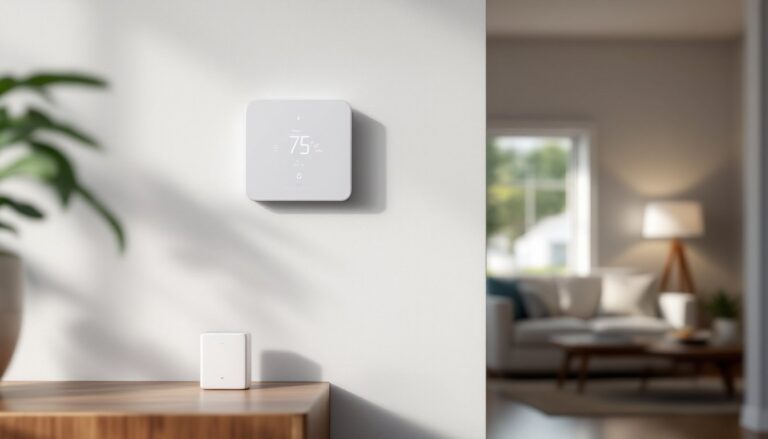
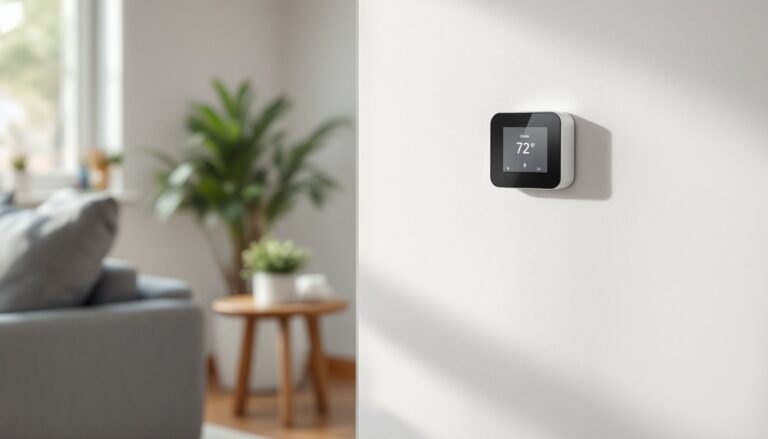
The Amazon Smart Thermostat isn’t trying to win design awards. It’s a 3.4-inch square unit with a simple LED display showing current temperature and basic status icons. No touchscreen, no color display, just a straightforward interface that does the job.
What sets it apart is price-to-performance ratio. At roughly $80 retail (often less during sales), it undercuts most competitors by $50 to $200. You get Wi-Fi connectivity, Alexa voice control, and Energy Star certification without the premium branding.
The device uses a Honeywell Home TH6320U2008 hardware platform, a reliable workhorse that’s been field-tested in commercial installations. Amazon rebranded it with their app ecosystem and Alexa integration. That means you’re getting proven HVAC control components, not some experimental prototype.
Key specs:
- Compatibility: Works with most 24V HVAC systems (gas, oil, electric, heat pump)
- Wiring: Requires C-wire for power (common limitation across smart thermostats)
- Connectivity: 2.4 GHz Wi-Fi only (no 5 GHz support)
- Voice control: Native Alexa integration
- Certifications: Energy Star certified, ETL listed
It won’t wow anyone with premium materials or advanced sensors. But for straightforward temperature control with smart home integration, it covers the essentials without the markup.
Installation and Setup: A DIY-Friendly Experience
If you’ve ever swapped out a light fixture, you can handle this install. The Amazon Smart Thermostat uses standard HVAC wiring and mounts to a standard thermostat backplate footprint. Most installs take 30 minutes or less.
What you’ll need:
- Phillips screwdriver
- Wire labels (usually included)
- Smartphone with Alexa app
- Optional: voltage tester (for safety)
Critical pre-check: This thermostat requires a C-wire (common wire) for continuous 24V power. Check your existing thermostat’s wiring before ordering. If you don’t have a C-wire, you’ll need to either run new wire from your furnace or install a C-wire adapter kit (adds $20–$40 and an hour of work).
Installation steps:
- Turn off power at the breaker controlling your HVAC system. Don’t just flip the furnace switch, kill it at the panel.
- Remove the old thermostat and photograph the wiring configuration before disconnecting anything.
- Label each wire using the included stickers (R, C, Y, G, W, etc.). These correspond to standard HVAC functions.
- Mount the new backplate using the provided screws and level it, a crooked thermostat bugs you forever.
- Connect wires to matching terminals. Push firmly until you hear a click.
- Snap on the faceplate and restore power.
- Download the Alexa app and follow the in-app setup wizard. It’ll walk you through Wi-Fi connection and system configuration.
The app asks basic questions: heating fuel type (gas, oil, electric), number of stages, whether you have a heat pump. Answer honestly, incorrect settings can damage equipment or reduce efficiency.
One heads-up: The Alexa app setup process occasionally times out during Wi-Fi pairing. If that happens, restart the thermostat by pulling the faceplate off for 10 seconds and try again.
Permit note: Simple thermostat replacement doesn’t typically require a permit. But if you’re running new low-voltage wire or modifying your HVAC system, check local codes. When in doubt, call your jurisdiction’s building department.
Performance and Temperature Control Accuracy
Smart features aside, a thermostat’s core job is maintaining the temperature you set. The Amazon Smart Thermostat handles this competently, with a ±1°F accuracy range in controlled testing.
The device uses a temperature swing (also called differential) of about 1°F. That means if you set it to 68°F, the furnace kicks on around 67°F and shuts off around 69°F. This is standard for residential thermostats and prevents short-cycling, which stresses equipment and wastes energy.
In real-world use, temperature stability depends heavily on thermostat placement. Mount it on an interior wall away from windows, doors, vents, and direct sunlight. A thermostat in a drafty hallway will never deliver accurate whole-home comfort.
One limitation: The Amazon thermostat lacks remote sensors. Premium models like Ecobee include wireless room sensors to average temperature across multiple zones. This thermostat only reads temperature at its own location. If your bedroom runs 5°F colder than the hallway where the thermostat sits, you’ll need to adjust your schedule or add zone dampers.
Heating and cooling cycles respond promptly to manual adjustments and scheduled changes. There’s no noticeable lag between tapping the app and hearing the furnace ignite. System compatibility with multi-stage heating and cooling works as advertised, though performance depends on correct initial configuration.
The LED display is visible in daylight but dims automatically at night. You can’t adjust brightness, it’s either auto or off. Not a dealbreaker, but worth noting if you prefer full control.
Smart Features and Alexa Integration
This thermostat shines with Alexa voice control. Say “Alexa, set the thermostat to 70” and it responds instantly. You can also ask current temperature, create routines, and integrate with other smart home devices.
Core smart features:
- Remote control via Alexa app: Adjust temperature, change modes (heat/cool/auto), and view current settings from anywhere with internet access.
- 7-day scheduling: Set different temperatures for wake, away, home, and sleep periods. Up to four periods per day.
- Hunches: If Alexa notices you usually turn down the heat at 10 PM, it’ll suggest automating that action.
- Geofencing (limited): Can trigger routines when your phone arrives or leaves home, but it’s not as refined as dedicated geofencing in Nest or Ecobee apps.
What’s missing:
- No HomeKit or Google Assistant support. This is Alexa-only. If you’re invested in Apple or Google ecosystems, look elsewhere.
- No learning algorithms. Unlike Nest, which learns your patterns automatically, this thermostat requires manual schedule programming.
- Limited energy reports. The app shows basic runtime data, but you won’t get detailed efficiency breakdowns.
The Alexa app interface is straightforward. Temperature control sits front and center, with scheduling tucked into a separate menu. It’s not as polished as dedicated thermostat apps, but it gets the job done without constant troubleshooting.
One useful trick: Create an Alexa routine that adjusts the thermostat when you arm your security system or lock the front door. This level of automation integration beats manually adjusting settings every time you leave.
Energy Savings and Cost-Effectiveness
Amazon claims the smart thermostat can save an average of $50 per year on heating and cooling costs. That figure comes from Energy Star testing and assumes you’re replacing a non-programmable thermostat with zero schedule control.
Realistically, savings depend on three factors:
- What you’re replacing. Upgrading from a 1980s mercury switch? You’ll see significant savings. Swapping out a functioning programmable thermostat? Gains will be marginal.
- Your habits. If you already manually adjust temperature when leaving the house, automation won’t change much. If you forget constantly, scheduled setbacks make a real difference.
- Your HVAC system efficiency. A smart thermostat can’t fix a 20-year-old furnace with 60% efficiency. It optimizes run cycles but can’t overcome equipment limitations.
The Energy Star certification requires demonstrated ability to reduce energy use through features like scheduling and adaptive recovery (starting the furnace early so the house reaches target temperature at the scheduled time, not after).
At $80 upfront, the payback period runs roughly 1.6 years if you hit that $50/year savings figure. After that, it’s positive return. Compare that to a $250 Nest, which needs 5 years to break even at the same savings rate.
One hidden cost saver: Many utility companies offer rebates on Energy Star thermostats. Check your provider’s website, rebates from $25 to $75 are common, sometimes knocking the net cost under $50. That changes the value equation dramatically.
The energy monitoring features are basic compared to competitors, but they’re sufficient for identifying HVAC runtime patterns and spotting unusual behavior that might indicate equipment problems.
What’s Missing? Limitations to Consider
Budget pricing means trade-offs. Here’s what you sacrifice compared to premium thermostats:
No remote sensors. As mentioned, you can’t monitor or average temperature across multiple rooms. This limits comfort in homes with uneven heating or cooling.
Alexa ecosystem lock-in. No HomeKit, no Google Assistant, no SmartThings integration beyond basic workarounds. If you switch voice assistants later, you’ll need a new thermostat too.
Basic scheduling interface. The Alexa app’s scheduling tool works, but it’s clunky compared to dedicated thermostat apps. Expect extra taps and occasional frustration.
No occupancy sensing. Premium models use motion sensors to detect when you’re home and adjust automatically. This thermostat sticks to the schedule you program.
Limited data insights. Energy reports show runtime hours but lack detailed breakdowns by heating/cooling stage, outdoor temperature correlation, or efficiency trends over time. You won’t get the granular analysis provided by competitors.
No touchscreen. All adjustments happen via app or voice. There’s a small button on the device for manual override, but it’s inconvenient if your phone’s dead or Alexa’s unresponsive.
2.4 GHz Wi-Fi only. Most modern routers support both 2.4 GHz and 5 GHz bands. This thermostat only connects to 2.4 GHz, which can be congested in apartment buildings or tech-heavy homes. It’s not usually a problem but can cause intermittent connectivity issues.
No battery backup. If power fails, you lose all functionality. Premium thermostats include batteries to maintain settings and basic operation during outages.
These aren’t defects, they’re deliberate cost-cutting measures. Whether they matter depends on your priorities and existing smart home setup.
Conclusion
The Amazon Smart Thermostat delivers reliable temperature control and Alexa integration at a price that undercuts the competition by $50 to $150. It won’t impress with advanced sensors or learning algorithms, but it handles the fundamentals well.
Best for homeowners already invested in the Alexa ecosystem who want basic smart control without premium pricing. If you need multi-room sensors, cross-platform compatibility, or detailed energy analytics, spend more elsewhere. But if straightforward scheduling and voice control fit your needs, this thermostat punches above its weight class.