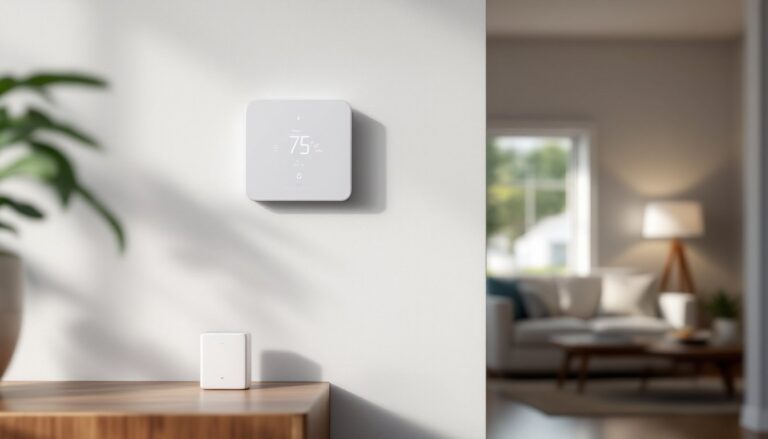
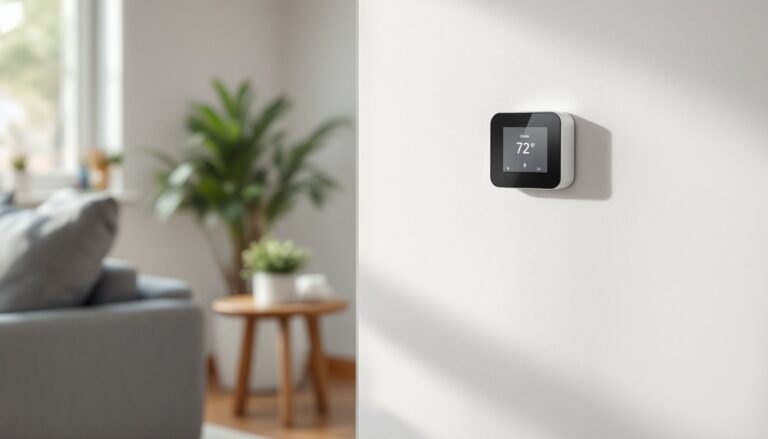
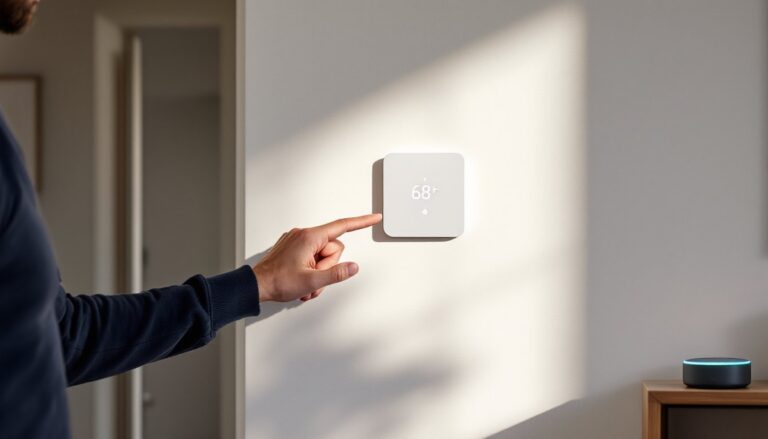
Electric baseboard heaters have a reputation for being energy hogs, but the bigger problem is usually the control system, not the heaters themselves. Most baseboard systems run on simple mechanical thermostats that cycle on and off with all the precision of a light switch. A smart thermostat changes that by adding scheduling, remote control, and adaptive heating patterns that can cut your electric bill without requiring you to rip out perfectly good baseboard units. But here’s the catch: not every smart thermostat works with high-voltage electric baseboard heat, and installing the wrong one can be dangerous or outright nonfunctional.
Table of Contents
ToggleKey Takeaways
- A smart thermostat for electric baseboard heaters must be explicitly rated for 240V high-voltage circuits to avoid damage or safety hazards, unlike standard low-voltage thermostats designed for furnaces.
- Smart scheduling, geofencing, and temperature accuracy offer 10–25% potential savings on heating costs by eliminating wasted runtime during unoccupied hours, with payback periods often under two years.
- Load capacity is critical: verify your total baseboard wattage and ensure the thermostat can handle it, or install a contactor relay if your system exceeds the device’s rated amperage.
- Top-performing models like Mysa Smart Thermostat, Stelpro Ki, and Sinopé TH1124ZB provide app control, voice integration, and energy reporting specifically designed for baseboard heat systems.
- Installation requires turning off the breaker, verifying power is off with a voltage tester, and connecting two wires (line in, load out); if uncomfortable with 240V electrical work, hire a licensed electrician to ensure safety and code compliance.
Why Electric Baseboard Heaters Need Specialized Smart Thermostats
Electric baseboard heaters operate on 240-volt high-voltage circuits, which is fundamentally different from the 24-volt low-voltage systems that most central HVAC units use. A standard smart thermostat designed for forced-air furnaces or heat pumps will not work, and attempting to wire one can fry the device or create a serious shock hazard.
Baseboard heaters also pull significant amperage. A single 1,500-watt baseboard unit on a 240V circuit draws around 6.25 amps, and many rooms have multiple units on the same thermostat. Smart thermostats rated for baseboard heat must handle loads typically between 15 and 22 amps depending on the model. Check your breaker panel and the nameplate wattage on your heaters before buying.
Another consideration: electric resistance heat is 100% efficient at the point of use, meaning every watt you pay for turns into heat. There’s no efficiency gain from the hardware itself, savings come entirely from better control and scheduling. That’s why smart features like geofencing, learning algorithms, and room-by-room zoning matter more with baseboard heat than with other systems.
Top Features to Look for in a Smart Thermostat for Baseboard Heat
Start with voltage compatibility. The thermostat must explicitly state support for line-voltage or high-voltage heating systems (120V or 240V). Don’t assume, check the spec sheet.
Look for these features:
- Load rating: Ensure the thermostat can handle your total wattage. Add up all baseboard units on the circuit. If you’re over 3,800 watts (about 16 amps at 240V), you may need a contactor or multiple thermostats.
- Scheduling and geofencing: These are your money-savers. You want 7-day programming at minimum, ideally with occupancy detection or smartphone location tracking to avoid heating an empty house.
- Temperature accuracy: Cheap mechanical stats can swing ±3°F. Digital models with ±0.5°F accuracy keep rooms more comfortable and reduce energy waste from overshooting setpoints.
- App control and voice integration: Remote access via iOS/Android apps is standard. Bonus if it works with Alexa, Google Assistant, or HomeKit for voice commands.
- Energy reporting: Some models track usage and cost, which helps you see whether your programming is actually saving money.
Skip models that require a C-wire (common wire) or external 24V transformer unless you’re comfortable with extra wiring. Most high-voltage stats are two-wire installs: line in, load out.
Best Smart Thermostats Compatible with Electric Baseboard Heaters
As of early 2026, the market for high-voltage smart thermostats remains smaller than the low-voltage segment, but several reliable options exist.
Mysa Smart Thermostat is purpose-built for electric baseboard and in-floor heating. It handles up to 3,800 watts at 240V (roughly 15 amps), works with Alexa, Google, and Apple HomeKit, and includes scheduling, geofencing, and energy reports. Installation is straightforward for anyone comfortable with basic electrical work. Mysa’s app is clean and the device has proven reliable in real-world installs.
Stelpro Ki STZW402WB is a Z-Wave thermostat rated for 4,000 watts at 240V. It integrates with Z-Wave hubs like SmartThings, Hubitat, or Home Assistant, making it a solid pick if you already run a smart home hub. No built-in Wi-Fi, so you’ll need a hub for remote access. Build quality is good, but setup requires more technical knowledge than plug-and-play Wi-Fi models.
Sinopé TH1124ZB uses Zigbee protocol and supports up to 3,800 watts. Like the Stelpro, it needs a compatible hub (Hubitat, Home Assistant, or Sinopé’s own gateway). Reviewers note responsive customer support and accurate temperature control, though testing done by smart home automation experts suggests Zigbee reliability varies depending on your mesh network strength.
For multi-room setups, consider multiple single-zone thermostats rather than trying to control several baseboard units with one device. Zoning improves comfort and efficiency, especially in homes where some rooms are used infrequently.
Installation Guide: Setting Up Your Smart Thermostat
Before you touch any wires, turn off the breaker for the heating circuit. Verify power is off with a non-contact voltage tester, baseboard circuits are 240V and will knock you flat.
Remove your old thermostat. Most mechanical stats have two wires: line (incoming power) and load (to the heater). Label them if they aren’t already marked. High-voltage thermostats are polarity-agnostic, so left/right doesn’t matter, but you do need to know which wire goes to the heater and which comes from the breaker.
Check your junction box. Some baseboard thermostats mount to a standard single-gang electrical box, others use a specialized 4-inch octagon box with a plaster ring. Make sure your new smart thermostat physically fits. If the old stat was surface-mounted and you’re installing a flush device, you may need to add a box, this is a good time to call an electrician if you’re not comfortable cutting drywall and splicing Romex.
Connect the new thermostat per the manufacturer’s wiring diagram. Most are simple two-wire hookups: line in from the breaker, load out to the heater. Some models include a ground wire terminal, use it if your box has a ground present.
Restore power at the breaker and follow the on-screen or app-based setup. You’ll connect to Wi-Fi, set your baseline temperature, and configure schedules. Test the system by raising the setpoint and confirming the baseboard heats up.
Safety Considerations and Electrical Requirements
This is not low-voltage thermostat work. 240V circuits can kill. If you’re not confident working with line-voltage wiring, hire a licensed electrician. Most jurisdictions do not require a permit for replacing a thermostat on an existing circuit, but adding a new circuit or relocating a thermostat usually does. Check with your local building department.
Wear safety glasses and insulated gloves. Never work on a live circuit. Use a multimeter or voltage tester to confirm power is off before touching any wires.
If your total baseboard wattage exceeds the thermostat’s rated capacity, do not force it. Install a contactor (a heavy-duty relay) to handle the load, with the thermostat controlling the contactor coil. This is a common setup in homes with multiple high-wattage heaters per zone. A qualified electrician can wire a contactor in about an hour.
Make sure your breaker size matches your heater load. A 15-amp breaker should serve no more than 3,600 watts of baseboard heat (80% of 15A × 240V per NEC guidelines). A 20-amp breaker supports up to 3,840 watts. Oversizing the breaker is a code violation and a fire risk.
How Much Can You Save with a Smart Thermostat on Baseboard Heat?
Savings depend on your existing habits and local electricity rates, but real-world data shows potential reductions of 10–25% on heating costs with smart scheduling and setback strategies.
Electric resistance heat costs roughly $0.03–$0.05 per kilowatt-hour in most U.S. regions (rates vary widely). A 1,500-watt baseboard heater running 8 hours a day at $0.12/kWh costs about $43 per month. Drop runtime to 6 hours through better scheduling and you save around $11 monthly per heater. Multiply that across multiple rooms and a heating season, and the payback period for a $150 smart thermostat is often under two years.
The biggest savings come from setback during unoccupied hours. Dropping the temperature 5–8°F when you’re at work or asleep reduces runtime significantly. Geofencing takes this further by detecting when everyone leaves and automatically switching to an away mode.
Recent connected home device testing has shown that learning thermostats, those that adapt to your behavior over time, perform best in homes with consistent routines. If your schedule is erratic, manual programming or geofencing may work better.
Don’t expect miracles. If you already manually lower your thermostats at night and when you leave, a smart upgrade won’t save as much. But if you’re the type to leave heat on 24/7 “because it’s easier,” a smart thermostat pays for itself quickly.
Keep an eye on your utility bills for the first few months and adjust your schedules. Many smart thermostats include energy reports that compare your usage month-over-month, and home automation buying guides consistently recommend tracking data for at least one full heating season before judging performance.
Conclusion
Upgrading to a smart thermostat won’t make electric baseboard heat as cheap to run as a heat pump, but it’s one of the most cost-effective improvements you can make to an existing baseboard system. The install is straightforward if you’re comfortable with electrical work, and the payback period is short enough that it makes sense even if you’re not planning to stay in the house forever. Just make sure you buy a model rated for line-voltage heating, respect the 240V power, and program it to match how you actually live in your home.