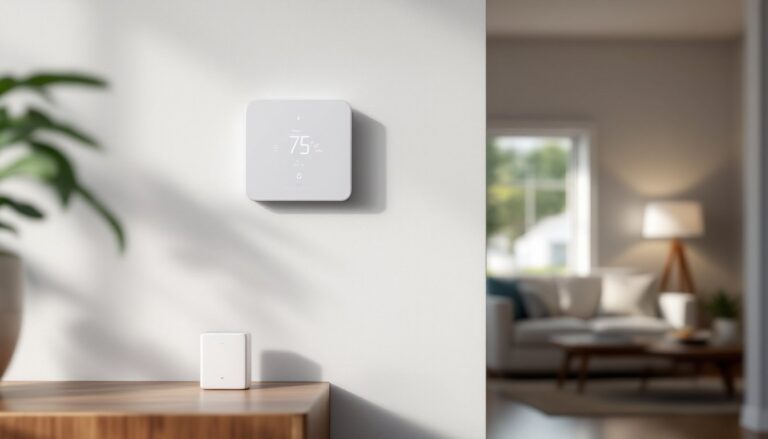
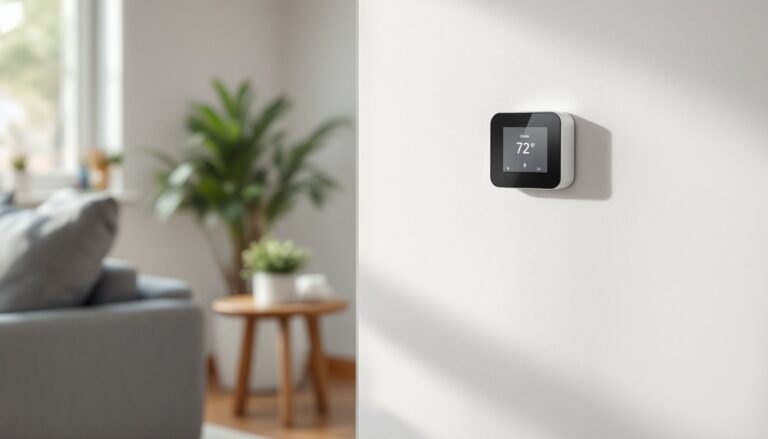
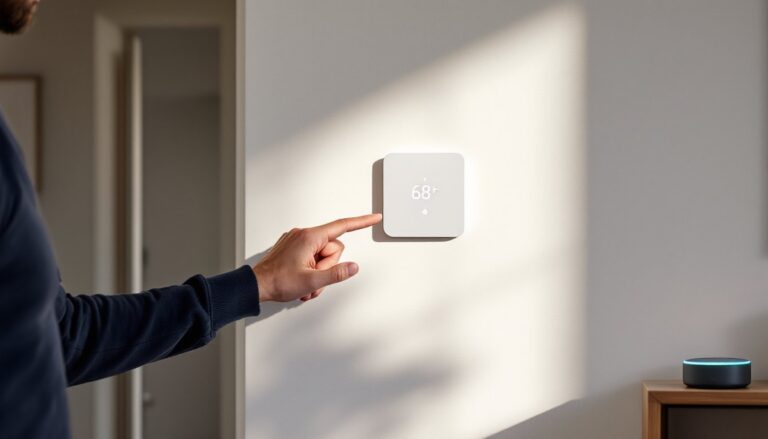
Line voltage thermostats control baseboard heaters, electric radiators, and wall-mounted convection units, the workhorses of electric heating in older homes, additions, and buildings where forced-air systems never made sense. For years, these systems were stuck with basic analog dials or programmable models that looked like relics from the ’90s. Now, line voltage smart thermostats bring app control, scheduling, and energy tracking to electric heat. The installation is straightforward for most DIYers, but the wiring differs from the low-voltage thermostats used with furnaces and heat pumps. Here’s what homeowners need to know before upgrading.
Table of Contents
ToggleKey Takeaways
- A line voltage smart thermostat switches 120V or 240V power directly to baseboard heaters and electric radiators, offering app control and energy tracking without requiring a separate transformer or control circuit.
- Line voltage smart thermostats differ fundamentally from low-voltage systems used with furnaces and heat pumps in wiring, compatibility, and safety procedures, making them purpose-built for direct-wire electric heating.
- Smart features like geofencing, scheduling, and real-time energy monitoring help homeowners reduce electric heating costs by heating only when and where needed, making the most impact on expensive electric resistance heating.
- Popular line voltage smart thermostat options include Mysa (Wi-Fi native), Stelpro Ki (Z-Wave), and Sinopé TH1124ZB (Zigbee), each offering different ecosystem compatibility for smart home integration.
- DIY installation is feasible for homeowners comfortable with electrical work, but requires turning off breakers, testing with a multimeter, verifying wire gauge, and confirming the heater’s load rating matches the thermostat’s specifications.
- Common issues like constant heating, Wi-Fi drops, or tripped breakers usually stem from wiring errors, load rating mismatches, or poor signal location—consulting manufacturer support or hiring an electrician is recommended for complex situations.
What Is a Line Voltage Smart Thermostat?
A line voltage thermostat switches 120V or 240V power directly to the heating element, there’s no transformer, no 24V control circuit, and no separate relay. The thermostat itself handles the full electrical load of the heater, which can range from a few hundred watts for a small baseboard to several kilowatts for a larger unit.
Smart line voltage models add Wi-Fi connectivity, app control, and automation on top of that basic switching function. They let homeowners adjust temperatures remotely, set weekly schedules, and monitor energy use, features previously available only to those with forced-air systems and low-voltage thermostats.
These devices are typically rated for 15A or 20A resistive loads (check the heater’s nameplate and the thermostat’s specs). Some models also support double-pole configurations for true 240V shutoff, which is safer and sometimes required by local electrical codes.
How Line Voltage Differs from Low Voltage Systems
Low-voltage thermostats (the kind that work with most furnaces, heat pumps, and central air conditioners) operate on a 24V control circuit. They send signals to relays or control boards that do the heavy lifting. Line voltage thermostats skip the middleman and switch the full voltage directly.
That difference matters for three reasons:
- Compatibility: A Nest or Ecobee designed for low voltage won’t work with baseboard heaters without an adapter or relay module. Line voltage smart thermostats are purpose-built for direct-wire electric heat.
- Wiring: Line voltage installations involve hot and neutral wires (and sometimes a ground). There’s no common wire, no R or C terminal, just line-in and load-out.
- Safety: Working with 120V or 240V requires turning off the breaker, testing with a multimeter, and treating every wire as live until proven otherwise. Wear insulated gloves and use a non-contact voltage tester before touching anything.
Homeowners with forced-air systems and a low-voltage thermostat can skip this guide. This article is for those heating with electric baseboard, wall heaters, or radiant cove heaters.
Why Upgrade to a Smart Line Voltage Thermostat?
Electric resistance heat is simple and reliable, but it’s also expensive to run. Smart thermostats help by making it easier to heat only when and where needed.
Scheduling and setbacks are the biggest energy savers. A programmable thermostat could do this, but most homeowners set it once and forget it. Smart models adjust on the fly, lowering temps when the house is empty (via geofencing) or when utility rates spike (via time-of-use integrations).
Remote control matters more with electric heat than with other systems. Forgot to turn down the bedroom heater before a weekend trip? Pull out the phone and fix it. Arriving home early? Bump the temperature up from the driveway.
Energy monitoring gives real-time feedback. Seeing a kilowatt-hour ticker climb in real time makes the cost visible in a way that monthly utility bills don’t. Some models estimate costs based on local rates, which helps homeowners decide whether a two-degree setback is worth the comfort trade-off.
Multi-zone control is easier with smart thermostats. Homes with multiple baseboard heaters can control each room independently via a single app, rather than walking around adjusting dial thermostats.
Smart line voltage thermostats won’t magically cut electric bills in half, but they make it easier to avoid heating empty rooms or running heaters at full blast overnight.
Top Line Voltage Smart Thermostats to Consider
The line voltage smart thermostat market is smaller than the low-voltage segment, but there are solid options.
Mysa Smart Thermostat is the most popular choice for baseboard and in-wall fan heaters. It’s purpose-built for line voltage, offers app control, scheduling, and integrates with Alexa, Google Assistant, and Apple HomeKit. The interface is clean, setup is straightforward, and it handles both 120V and 240V systems. Mysa’s energy reports break down usage by day and week, which is useful for tracking cost.
Stelpro Ki STZW402WB+ is a Z-Wave model that works with SmartThings, Hubitat, and other hubs. It’s a good pick for homeowners already invested in a Z-Wave ecosystem. It supports double-pole wiring for 240V systems and has a simple touchscreen interface.
Sinopé TH1124ZB is a Zigbee thermostat compatible with Home Assistant, Hubitat, and Samsung SmartThings. It’s designed for electric baseboard and convection heaters, handles up to 3,800W at 240V, and offers local control without relying on cloud servers, a plus for privacy-conscious users.
When comparing models on smart thermostat roundups, note that most lists prioritize low-voltage models like Nest and Ecobee. Homeowners with line voltage systems need to filter for compatibility.
Avoid generic “smart switches” marketed as thermostats unless they explicitly list a temperature sensor and load rating suitable for heating. A Wi-Fi outlet switch won’t maintain a setpoint, it’s just on/off control.
Installation Tips for DIY Homeowners
Installing a line voltage smart thermostat is within reach for homeowners comfortable with basic electrical work, but it’s not plug-and-play.
Before starting:
- Turn off the breaker controlling the heater circuit. Lock it out or tape over it so no one flips it back on mid-install.
- Use a non-contact voltage tester on every wire in the box, even after the breaker is off. Test twice.
- Take a photo of the existing thermostat’s wiring before disconnecting anything.
Typical wiring:
Most single-pole line voltage thermostats have two wires: line (hot) and load (to heater). The new smart thermostat will have terminals labeled L1 (line in) and L2 (load out), or similar.
For 240V double-pole installations, there are four wires: two hot conductors (often black and red), and sometimes a neutral and ground. The smart thermostat instructions will show how to land each.
Common gotchas:
- Box depth: Some old thermostats were surface-mounted or used shallow boxes. Smart models are thicker and may not fit. Check the thermostat’s depth spec against your wall box. A 2-gang shallow box can sometimes be swapped for a deeper one if there’s room in the wall cavity.
- Wire gauge: Heaters typically run on 12 AWG or 10 AWG wire. If the existing wires are stiff and hard to bend, leave extra slack and use wire nuts rated for the gauge.
- Load rating: Check the heater’s nameplate amp draw and compare it to the thermostat’s max rating. A 1,500W baseboard on a 120V circuit draws 12.5A: a 2,000W unit on 240V draws 8.3A. Don’t overload the thermostat.
If the existing box has more than two wires, consult the heater’s wiring diagram. Some multi-element heaters or multi-zone setups require a relay or contactor.
After wiring, test before closing up: Restore power, set the thermostat to call for heat, and confirm the heater energizes. Listen for the click of the relay and feel for warmth.
If the home has aluminum wiring (common in 1960s–70s construction), consider hiring an electrician. Aluminum terminations require special techniques and anti-oxidant compound.
Smart Features That Make the Biggest Difference
Not all smart thermostats offer the same feature set, and some matter more than others for electric heating.
Geofencing adjusts temperature based on phone location. When everyone leaves, the thermostat lowers the setpoint. When someone heads home, it warms the space back up. This works best for households with predictable schedules and reliable GPS.
Energy reports show daily and weekly usage in kilowatt-hours or dollars. Mysa’s app, for example, displays a running total and compares usage week-over-week. This visibility helps homeowners see the impact of setbacks and adjust behavior.
Time-of-use (TOU) integration is less common but valuable where electric rates vary by time of day. Some utilities offer cheaper rates overnight. A smart thermostat can pre-heat during off-peak hours and coast during peak times.
Voice control via Alexa, Google Assistant, or Siri is convenient but not essential. It’s faster to say “set bedroom to 68” than to open an app, but the novelty wears off.
Open window detection uses rapid temperature drops to detect an open window and pause heating. This feature works better in theory than practice, it can’t distinguish between a drafty room and an actual open window.
Home/Away modes let users switch between preset profiles with one tap. “Away” might set all zones to 60°F: “Home” restores individual room preferences.
When evaluating models on thermostat comparison guides, prioritize scheduling flexibility, energy reporting, and compatibility with existing smart home ecosystems over gimmicks like color touchscreens.
Troubleshooting Common Line Voltage Thermostat Issues
Thermostat powers on but heater doesn’t run: Check that the breaker is on and the heater’s internal limit switch hasn’t tripped. Some baseboard heaters have a manual reset button near the element. Also verify that the thermostat’s load rating isn’t exceeded.
Heater runs constantly: The thermostat may be stuck in the closed position (relay failure) or incorrectly wired. Double-check that line and load terminals are correct, swapping them can cause erratic behavior. If the thermostat’s temperature sensor is in a cold spot (near a window or exterior wall), it may never reach setpoint.
Wi-Fi connection drops frequently: Line voltage thermostats are often installed on exterior walls where Wi-Fi signal is weaker. If possible, move the router closer, add a mesh node, or use a model with a stronger radio. Mysa thermostats, for example, have decent range but still struggle in metal-sided or stucco homes.
Inaccurate temperature readings: Smart thermostats measure air temperature at the device, which may not reflect the room’s average. If the thermostat is installed near a door, window, or heat source, consider recalibrating the offset in the app settings (most models allow ±3°F adjustment).
Tripped breaker after installation: This indicates a short circuit or overload. Turn off the breaker, remove the thermostat, and inspect the wiring. Look for bare wire touching the metal box or terminals landed incorrectly. If the heater draws more than the thermostat’s rating, install a contactor to handle the load and let the thermostat switch the contactor coil.
App shows “offline” but thermostat still controls heat: The thermostat is working locally but has lost internet connection. Check Wi-Fi credentials, router settings, and firmware updates. Some models revert to a basic schedule when offline.
For persistent issues, consult the manufacturer’s support line. Many smart thermostat buying guides include links to setup troubleshooting.
If the home’s wiring is old, the breaker is oversized for the circuit, or there’s uncertainty about load calculations, hire a licensed electrician. Electric heating work is straightforward, but mistakes can start fires.